

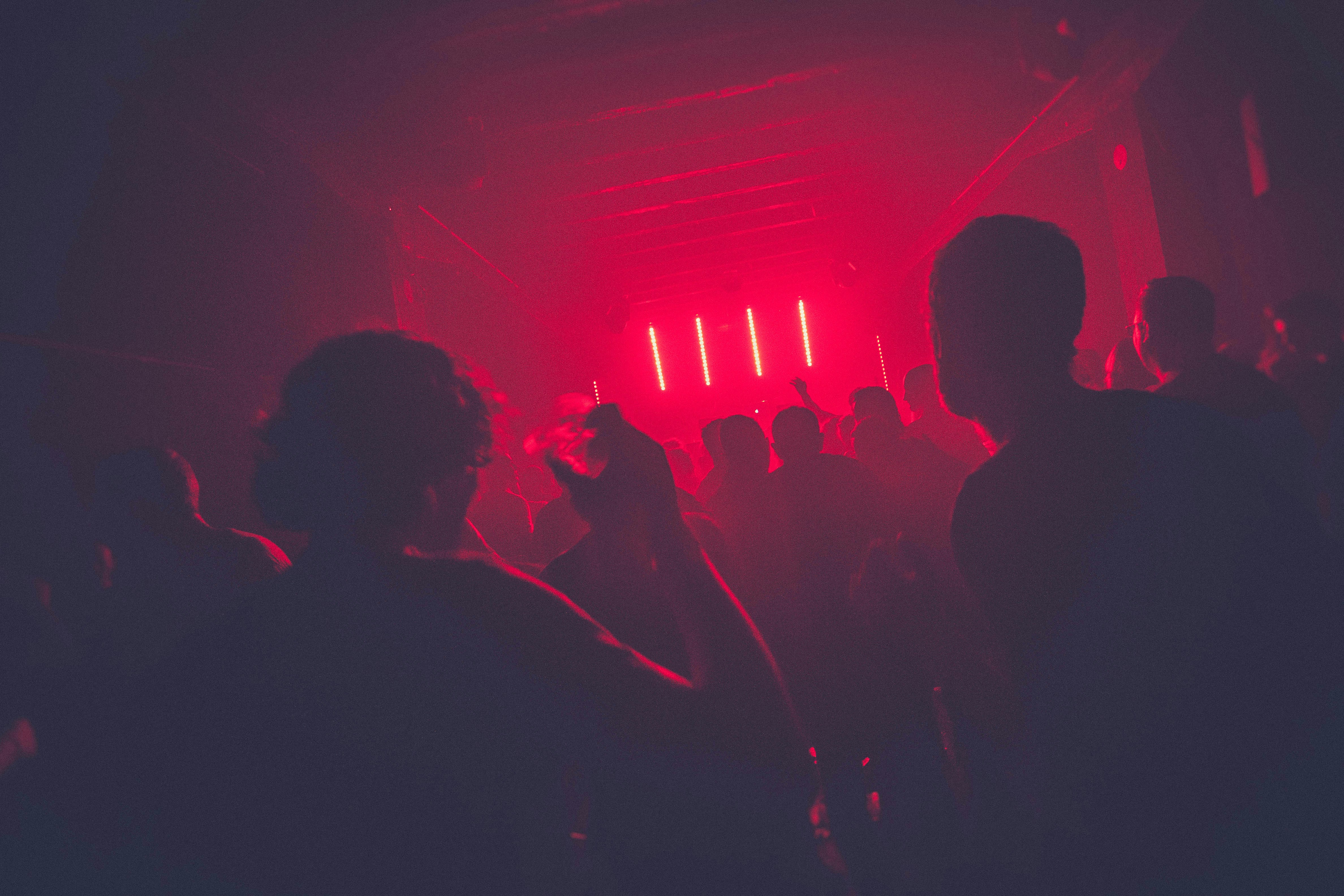
A Whitepaper on the Decline of Nightlife, Changing Social Habits, and Generational Shifts
Nightclubs are disappearing at a steady and measurable rate. While economic pressure is a major factor, it does not fully explain the scale or permanence of the decline. Alongside venue closures, there has been a deeper cultural shift in how younger generations socialise, drink, and prioritise their time.
This whitepaper examines:
The documented decline of nightclubs using recent closure data
The structural and economic pressures affecting nightlife venues
How disrupted social entry points reshaped generational habits
The rise of delayed drinking and reduced alcohol centrality
The emergence of grind-focused mentalities and optimisation culture
What has replaced nightclubs as social infrastructure
What has been quietly lost as a result
The findings suggest nightlife did not simply shrink. It was functionally replaced by more controlled, purpose-driven, and individualised social models.
1. Introduction: a changed night out
On paper, Friday night still exists. Trains are full. Restaurants are booked. Bars are busy enough to feel justified.
But something’s flatter than it used to be.
There are fewer queues. Fewer accidental conversations. Fewer moments where you’re pulled into someone else’s orbit for no real reason. Most people already know exactly who they’re with and how the night will end. Groups arrive together, stand together, leave together.
It isn’t that people stopped going out. It’s that going out quietly changed. The energy shifted from open to contained. From porous to planned. And somewhere along the way, nightclubs, once chaotic and imperfect, started disappearing without much noise at all.
2. The scale of nightclub decline
The decline of nightclubs is not anecdotal. It is structural and ongoing.
Industry data consistently shows a sustained reduction in late-night venues, with nightclubs experiencing the sharpest contraction. Figures published by the UK Night Time Industries Association (NTIA) indicate that nightclub closures have averaged around three per week since the pandemic, equivalent to 150 or more per year.
In early 2024, that pace appeared to accelerate. NTIA-linked reporting showed 67 nightclubs closing in the first quarter alone, suggesting a closure rate closer to five per week during that period.
Cumulatively, between June 2020 and June 2024, approximately 480 UK nightclubs closed, alongside the loss of over 25% of late-night venues across the wider night-time economy.
Independent datasets reinforce this trend. Statista figures show the number of operating nightclubs falling from 1,418 in March 2020 to around 1,130 by mid-2022, with no full recovery since.
Definitions vary, and some venues reclassify rather than formally close, but the direction is clear. In many towns and cities, there are simply fewer spaces designed for late-night, open-ended social interaction.
3. Economic pressure and structural fragility
Nightclubs have always operated on tight margins. Recent years exposed just how fragile that model had become.
Rising energy costs, staffing shortages, higher wages, rent, licensing compliance, and business rates all increased the cost base. At the same time, consumer behaviour shifted. A night out became more expensive, more deliberate, and more easily postponed.
Entry fees feel more noticeable. Drinks require budgeting rather than impulse. Transport costs shape decisions about how long to stay out. What was once habitual becomes occasional.
This creates a feedback loop. Reduced footfall leads to higher prices. Higher prices reduce frequency. Lower frequency makes venues less viable. Economic pressure accelerates closures, but it does not explain why demand failed to rebound when restrictions ended.
The missing piece is cultural.
4. A broken generational handover
Nightlife relies on repetition. People learn how to go out by doing it often enough that it stops feeling like a decision.
For a significant cohort, that repetition never happened.
The years typically associated with discovering nightlife were replaced by lockdowns, restrictions, and indoor routines. Social habits formed in private spaces and digital environments instead of public ones. When venues reopened, the expected return did not materialise.
This is less about rejection and more about absence. Without early momentum, nightlife does not become default behaviour later. It feels unfamiliar, effortful, and optional.
5. Delayed drinking and reduced alcohol centrality
Alongside disrupted social habits sits a clear shift in alcohol consumption.
Survey data and cultural reporting increasingly show that younger adults are:
Drinking less frequently
Starting regular alcohol consumption later, often in their early to mid twenties
Treating alcohol as optional rather than central to social life
This change is driven by a mix of health awareness, financial pressure, and lifestyle priorities. Alcohol now competes with fitness, mental clarity, productivity, and cost control.
Nightclubs, historically structured around alcohol-led revenue models, struggle when drinking is no longer the primary social driver. When alcohol moves from default to discretionary, the environments built around it lose momentum.
6. Grind culture and the optimisation mindset
At the same time, younger generations are operating within a strong optimisation framework.
Work, self-improvement, and financial security carry heavy weight early in adult life. Content ecosystems reinforce narratives about productivity, side projects, personal brands, and maximising time.
Late nights, unstructured socialising, and hangovers conflict with this mindset. Leisure increasingly needs justification. Socialising must fit around progress, not disrupt it.
This does not indicate a lack of ambition or connection. It reflects an environment where stability feels fragile and time feels scarce. In that context, nightlife can feel inefficient rather than liberating.
7. What nightclubs actually provided
It is easy to reduce nightclubs to music, alcohol, and excess. Their deeper function was social.
Nightclubs enabled:
Interaction without context
Social mixing across class, industry, and background
Temporary suspension of purpose
Permission to interrupt and be interrupted
They were among the last environments where connection did not require an introduction, a shared identity, or an outcome.
8. What replaced them
Nightclubs did not disappear into a vacuum. They were replaced by more controlled forms of socialising.
These include:
Bars oriented around closed groups
Home-based socialising with fixed guest lists
Purpose-driven events and structured networking
Online-first interaction
These environments reduce social risk and increase predictability. They also reduce chance encounters. Interaction increasingly happens within existing networks rather than across them.
9. The loss of accidental connection
The most significant loss is not nightlife itself, but what nightlife enabled.
Accidental meetings. Unplanned conversations. Moments that did not need to be productive or documented.
As social life becomes more curated and intentional, the opportunities for spontaneous connection diminish. This has subtle long-term implications for social mobility, cultural mixing, and collective life.
10. Conclusion
The decline of nightclubs is often framed as an economic problem or a generational failing. It is better understood as a structural shift in how society organises social connection.
Economic pressure closed venues. Cultural shifts reduced demand. Interrupted habits never fully returned. Alcohol lost centrality. Optimisation culture filled the gap.
The result is not a less social population, but a more contained one.
The open question is not whether nightclubs should return, but whether new forms of social infrastructure will emerge that allow unplanned, low-pressure human connection without performance, productivity, or permission.
Appendix A: Data sources and supporting evidence
A.1 Nightclub closures and venue decline
The UK Night Time Industries Association (NTIA) reports nightclub closures averaging around three per week since the pandemic, equivalent to 150+ per year.
NTIA-linked reporting in early 2024 showed 67 nightclubs closing in Q1 2024, suggesting a rate of nearly five per week.
Between June 2020 and June 2024, NTIA estimates indicate the loss of approximately 480 nightclubs, alongside the closure of over 25% of late-night venues across the wider night-time economy.
Statista data shows the number of operational nightclubs declining from 1,418 (March 2020) to around 1,130 (June 2022), with no full recovery thereafter.
Primary sources
Night Time Industries Association industry reports and press releases
Mixmag reporting on NTIA closure data
Statista datasets on nightclub counts
A.2 Consumer behaviour and nightlife participation
Post-pandemic reporting consistently notes a shift from habitual weekly nights out to occasion-based attendance.
Rising costs for entry, drinks, and transport are widely cited as factors increasing friction around late-night socialising.
A.3 Generational shifts and delayed drinking
Surveys and cultural analysis report delayed regular alcohol consumption, often into the early to mid twenties.
Reduced prioritisation of traditional clubbing among younger adults is particularly pronounced for those whose early adulthood coincided with lockdown periods.
Primary sources
DJ Mag survey reporting
National newspaper cultural analysis
Public health and lifestyle trend reporting
A.4 Work, productivity, and optimisation culture
Labour market and cultural reporting consistently identifies a stronger emphasis on early career progression, financial security, and time optimisation.
Leisure activities that interfere with productivity are increasingly deprioritised.
A.5 Limitations
Definitions of “nightclub” vary across datasets
Some venues reclassify rather than formally close
Survey data reflects sentiment rather than absolute participation
Despite these limitations, the convergence of data, reporting, and lived experience strongly supports the conclusion that nightclub decline represents a long-term structural shift rather than a temporary disruption.

Why Coffee Shops Became Everyone’s Third Place
4 mins

How Algorithms Changed Human Interaction
4 mins
The Future of Connection Is Local Again
4 mins

What Dennis Yu Said About AI, Local Ads, Authority, and Reputation
4 mins
Why Being “Near” Someone Is More Powerful Than Following Them
4 mins